

Mini Gas Stove Guide (India 2026): Types, Running Cost, Safety & How to Choose
Quick answer: A mini gas stove is a compact single- or double-burner cooktop that runs on a 220–230g butane cartridge, an LPG cylinder, or both. For most Indian buyers the right pick is a butane single burner (₹2,000–5,000) for trekking and solo trips, or a dual-fuel double burner (around ₹5,000) if you want to cook full meals or keep it as a power-cut backup. The three things that actually matter are a safety cut-off, piezo ignition, and whether you can buy the fuel where you're going.
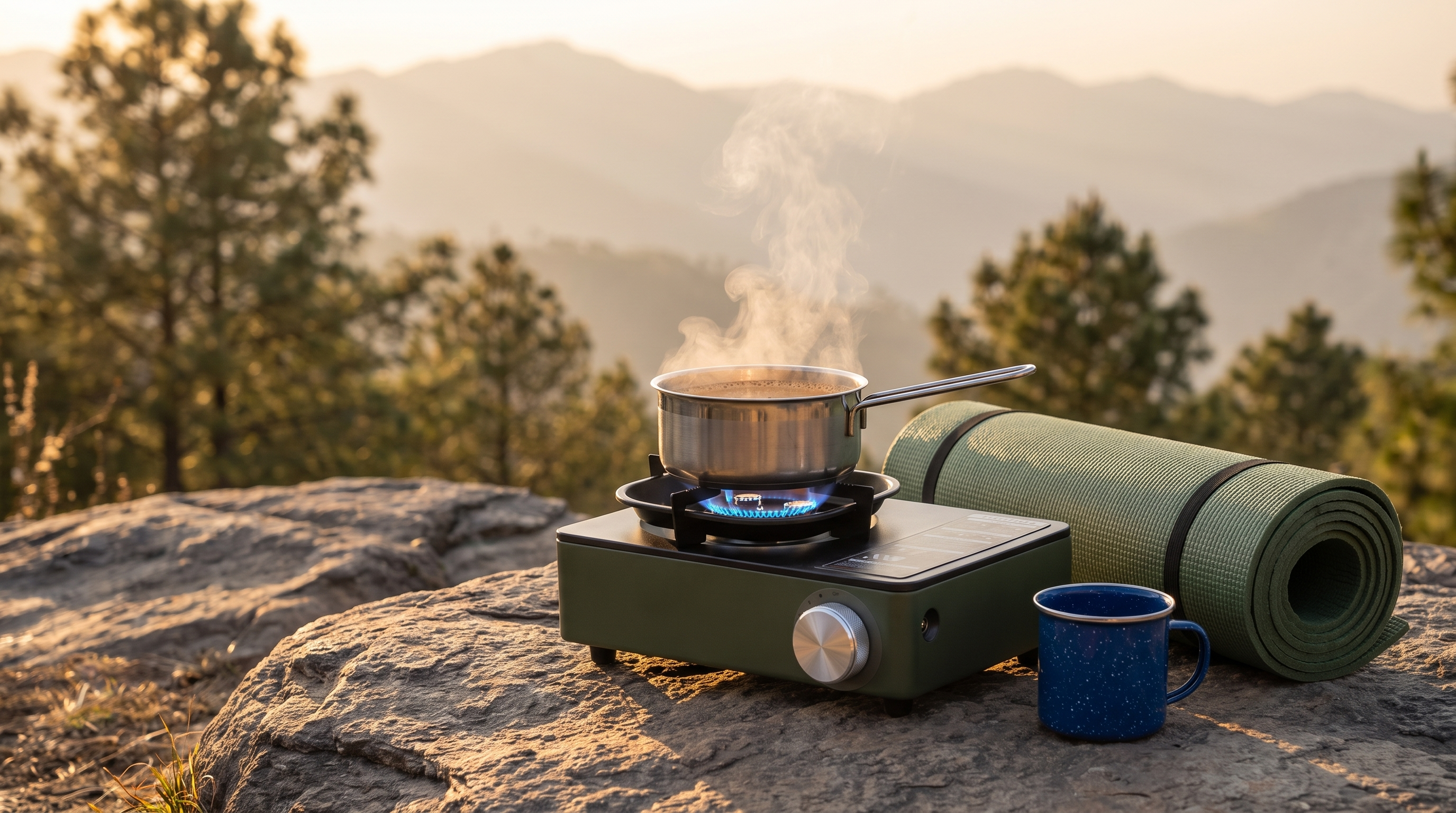
What is a mini gas stove?
A mini gas stove — also sold as a portable gas stove, camping stove or travel stove — is a self-contained burner with its own fuel supply and ignition. Unlike your kitchen hob, it needs no pipeline, no installation and no external connection. You slot in a fuel cartridge, click the igniter, and cook.
People buy them for four reasons, and the reason changes which stove is right:
- Camping and trekking — weight and pack size dominate. Single burner, butane.
- Power cuts and LPG outages — you want something that works with fuel you can get locally. Dual-fuel wins.
- Small kitchens, PGs and rented flats — where a piped connection isn't an option.
- Road trips and caravans — a double burner so you're not cooking one dish at a time.
Butane, LPG or dual-fuel: which should you get?
| Butane cartridge | LPG cylinder | Dual-fuel | |
|---|---|---|---|
| Portability | Excellent — fits in a backpack | Poor — heavy, needs a hose | Excellent on butane |
| Cost per meal | Higher | Lowest | Your choice |
| Cold weather | Weakens below ~5°C | Better | Switch to LPG |
| Fuel availability | Good in cities, patchy in remote areas | Everywhere | Never stuck |
| Best for | Trekking, picnics, short trips | Home backup | Long trips, caravans, serious backup |
The cold-weather point catches people out. Butane's boiling point is around −0.5°C, so as ambient temperature drops towards freezing the cartridge pressure falls and your flame gets weak. If you camp in the hills in winter, that is the single strongest argument for dual-fuel.
What does a mini gas stove actually cost to run?
This is the question almost no product page answers. A standard 220–230g butane cartridge gives roughly 1.5 to 2 hours of burn time on a medium flame. In practice that is about four to six simple meals — chai, maggi, dal, a few rotis.
Two things shorten it dramatically:
- Wind. An unshielded flame in a breeze can double your fuel use. A simple foil windshield is the cheapest upgrade you will ever make.
- Running on full blast. Most cooking doesn't need maximum flame. Simmering uses a fraction of the gas.
Rule of thumb for planning: one cartridge per person per weekend, and always carry one spare. For a home backup kit, four to six cartridges stored in a cool, dry cupboard covers a typical multi-day outage.
Key takeaways
- Single burner for solo trips and chai; double burner if you cook actual meals for two or more.
- Never buy a butane stove without an overpressure safety cut-off.
- One 220g cartridge ≈ 1.5–2 hours medium flame ≈ 4–6 simple meals.
- Butane loses power near freezing — dual-fuel solves winter camping.
- Piezo ignition is non-negotiable in damp or windy conditions. Matches fail when you need them most.
The safety rules that actually matter
Portable stoves are safe when used correctly and genuinely dangerous when they aren't. Four rules cover almost every real incident:
- Never use one in a sealed space. Not in a closed tent, not in a car, not in a bathroom, not in a room with the windows shut. Butane combustion consumes oxygen and produces carbon monoxide, which is odourless. An open kitchen or a balcony is fine; a zipped tent is not, whatever the weather is doing outside.
- Check the cartridge seats correctly before igniting. The gas lock lever should close without force. If it fights you, the cartridge is misaligned — reseat it rather than forcing the lever.
- Never use an oversized pan. A pan wider than the stove body reflects heat down onto the cartridge. This is the most common cause of cartridge rupture. If the pan overhangs the stove edge, it is too big.
- Store cartridges below 40°C. That means not in a parked car in summer, and not next to the stove while it's running.
An overpressure shut-off valve is what protects you if a cartridge does overheat — it vents gas in a controlled way before the can can fail. Every stove in our portable and camping stove range has one.
Single burner or double burner?
Be honest about what you cook. A single burner heats one thing at a time, which is completely fine for chai, instant noodles, boiling eggs or reheating. It becomes frustrating the moment you want dal and rice, because the first dish goes cold while the second cooks.
A double burner roughly doubles the weight and the price, and it is worth it if you are feeding two or more people regularly, or relying on it through a power cut. For a solo trekker it is dead weight.
| If you are… | Get | Why |
|---|---|---|
| Trekking solo or in a pair | Butane single burner | Lightest, packs smallest, cheapest to buy |
| Camping as a family | Double burner | Cook two dishes at once, feed everyone hot |
| Buying for power cuts | Dual-fuel | Use LPG at home, butane when travelling |
| Road-tripping or caravanning | Dual-fuel double burner | No fuel anxiety, full meals on the road |
For a deeper comparison of the two formats, see our portable gas stove buying guide: single vs double burner.
What to check before you buy
- Piezo auto-ignition. One-click starting, no matches or lighter. Essential in wind and damp.
- Overpressure shut-off and gas lock lever. The two safety features worth paying for.
- Pan support width. Indian cookware — kadhai, tawa, pressure cooker bases — needs a wide, stable trivet. Narrow camping supports wobble under a loaded kadhai.
- Burner head size. A wide head spreads heat evenly instead of scorching a hot spot in the centre.
- A hard carry case. The igniter and burner head are the parts that break in a car boot.
- Fuel you can actually buy. Check cartridge availability for where you're going before you commit to butane-only.
Can you take a mini gas stove on a flight or train?
The stove itself is fine in checked baggage. The fuel is not. Gas cartridges are prohibited on aircraft entirely — in cabin and hold — and are restricted on Indian trains. Pack the stove, buy the fuel at your destination. Airlines do occasionally query a stove at screening, so packing it in its case with the cartridge visibly absent saves time.
Frequently asked questions
How long does one butane cartridge last?
Roughly 1.5 to 2 hours on a medium flame, which is about 4–6 simple meals. Wind and high flame settings cut this sharply, so carry a spare for any trip longer than a weekend.
Is a mini gas stove safe to use indoors?
Only in a well-ventilated space such as an open kitchen or a balcony with a window or door open. Butane consumes oxygen and produces carbon monoxide, so never use one in a sealed room, a closed tent or a car.
Can I use a mini gas stove as my main cooking stove?
You can, but the running cost is higher than piped gas or a full LPG cylinder. Most people use one as a second stove, a travel stove or an outage backup rather than a primary hob.
Why does my portable stove flame go weak in the hills?
Cold. Butane pressure drops as temperature approaches freezing. Warm the cartridge with your hands before use, keep it inside your sleeping bag overnight, or use a dual-fuel stove on LPG instead.
What size pan can I use on a portable gas stove?
Nothing wider than the stove body. An oversized pan reflects heat down onto the fuel cartridge, which is the most common cause of cartridge failure.
Shop portable & camping stoves
Single burner, double burner and dual-fuel butane/LPG stoves with piezo ignition and safety cut-off. Built for Indian cookware.
Prefer to rent gadgets instead of buying?
Explore daily, weekly and monthly rentals at NEWDRU Rentals — try it before you commit.
The bottom line
Buy for the trip you actually take, not the one you imagine. A butane single burner covers most weekend camping and every chai emergency. A dual-fuel double burner is the right call if you cook real meals outdoors, camp in cold weather, or want something dependable when the LPG runs out mid-recipe. Whatever you pick, check for the overpressure cut-off, use a pan that fits, and never light it in a closed space.
Heading out soon? Pair your stove with the rest of the kit in our camping essentials range, and run through the complete India camping checklist before you pack.